Why AI Falls Apart at 30% — And the System That Fixes It

Why does AI nail the first 30% of a task… then completely fall apart? I kept hitting this wall until I changed my approach. Not a better prompt. A better system. The Problem Every Builder Knows If you’ve used AI for anything beyond trivial tasks, you’ve felt this pain. You describe a complex feature. AI starts strong — scaffolding files, writing functions, making real progress. Then somewhere around the 30% mark, things go sideways. The context builds up. Requirements get lost in the noise. And by the end, you’re left with: Quietly dropped work that AI never mentioned Gaps it

Read More »

How to Set Up FastAPI + Docker + VS Code Debugging

A complete guide to debugging FastAPI applications in Docker containers with hot reload support and production safety What You’ll Learn By the end of this guide, you’ll have: VS Code debugging – Set breakpoints and step through your FastAPI code running in Docker Hot reload during development – Code changes automatically restart your server Multi-service support – Debug across multiple services and shared libraries Production-safe setup – Zero debug code in production builds Easy mode switching – Toggle between debug and reload modes with a single command This setup works for complex multi-service projects and handles the common conflicts that

Read More »

OAuth Token Refresh in Distributed Systems

The Problem Modern applications frequently integrate with third-party services through OAuth, requiring careful management of access tokens that expire over time. The challenge becomes particularly complex when multiple concurrent operations need to refresh the same user’s token simultaneously. Without proper coordination, this leads to race conditions where multiple processes attempt token refresh concurrently, potentially causing OAuth provider rate limiting, token invalidation, or inconsistent application state. Consider a FastAPI application making 100 parallel API calls to a third-party service. When the OAuth token expires, all 100 operations might detect the need for refresh simultaneously, creating a classic distributed systems coordination problem.

Read More »

Automating Startup of an Electron App on Windows Machines Using Task Scheduler

If you’re developing a Windows application that needs to run continuously in the background, you might initially consider using Electron’s app.setLoginItemSettings to add the app to the startup list. However, this approach only launches the app when a user logs in after a machine restart. This becomes problematic for machines used as local servers, which often undergo automatic restarts for reasons like security patch updates without requiring a user to log in. In such cases, app.setLoginItemSettings won’t suffice for relaunching the app automatically. To address this limitation, I recommend using Windows Task Scheduler. Unlike the startup app list, Task Scheduler

Read More »

Webflow Class System

Having worked extensively with Webflow over the past three months, my overall experience has been largely positive. I perceive Webflow as a strong contender to WordPress, owing to the remarkable ecosystem it’s cultivating. That being said, I believe there’s room for improvement, particularly when it comes to Webflow’s class system. Issues with the Current Class System The current class system requires every element to have an associated class for styling. This procedure can be time-consuming, particularly in the context of expansive projects comprising a myriad of elements. The mutability of class styles, with no option to lock them, raises challenges.

Read More »

Using Data Studio to Generate Reports from Cloud SQL PostgreSQL

Creating a dashboard with numbers and fancy charts is always a pain and involves whole lot of work. If the dashboard is for your clients, your end users, then it’s inevitable and it will be worth the time doing yourself given future changes are always going to happend. For internal monitoring, data reports, it’s a different story. We can always make our own dashboard to make the team happy but it has its costs, while at the same time there are already a lot of BI tools that is easy to use and flexible enough for this purpose. So this

Read More »

Migrate Parallel Desktop VM to VirtualBox

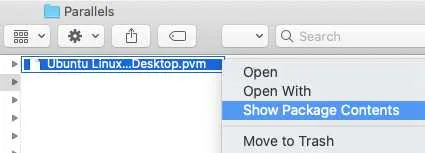
My Parallel Desktop subscription ended again when today I was trying to use my Windows VM to test out a page on IE. Over the last 12 months I had only been using vm for very limited reasons, and probably ended up only opened Parallel Desktop for twice. A $99 renew for maybe another two times open of it just does not make senses to me. So I decided to find a cheaper or free alternative. Luckily I found VirtualBox, which is free and open source. As I already have things setup in my Parallel Desktop VMs, so it would

Read More »

React Use Case: URL-Aware Search List

This project is to showcase a common use case in React web application that a List page with search and pagination while their state needs to be synced with the page URL query. Check out the Demo here You can also check the complete source code here Features Users can use the Search component to type in a keyword and hit enter or click “search” to trigger a list search. The list result should be rendered together with pagination, which allows users to navigate between different pages. when users trigger a new keyword search, the page needs to be rest

Read More »

Browser Service using Puppeteer + Lambda + Serverless

In my recent project, I was asked to implement several features that needs to use Puppeteer, mostly using it to open web pages and get content. The first feature is generating screenshot of given website URLs, a service that takes a URL and return Base64. The second one is similar, but instead of generating a screenshot of a given URL, it is required to general a thumbnail of a product detail page. To achieve that, we came up with an idea that creating a dedicated thumbnail web page for the detail page, to which we used a secure way passing

Read More »

Direct to S3 File Uploads in Python

The general tutorial from Heroku: https://devcenter.heroku.com/articles/s3-upload-python The main benefit for this approach is that AWS will now handle the process of the actually uploading, so that our server does not need to worry about the performance and it’s scalable.

Read More »